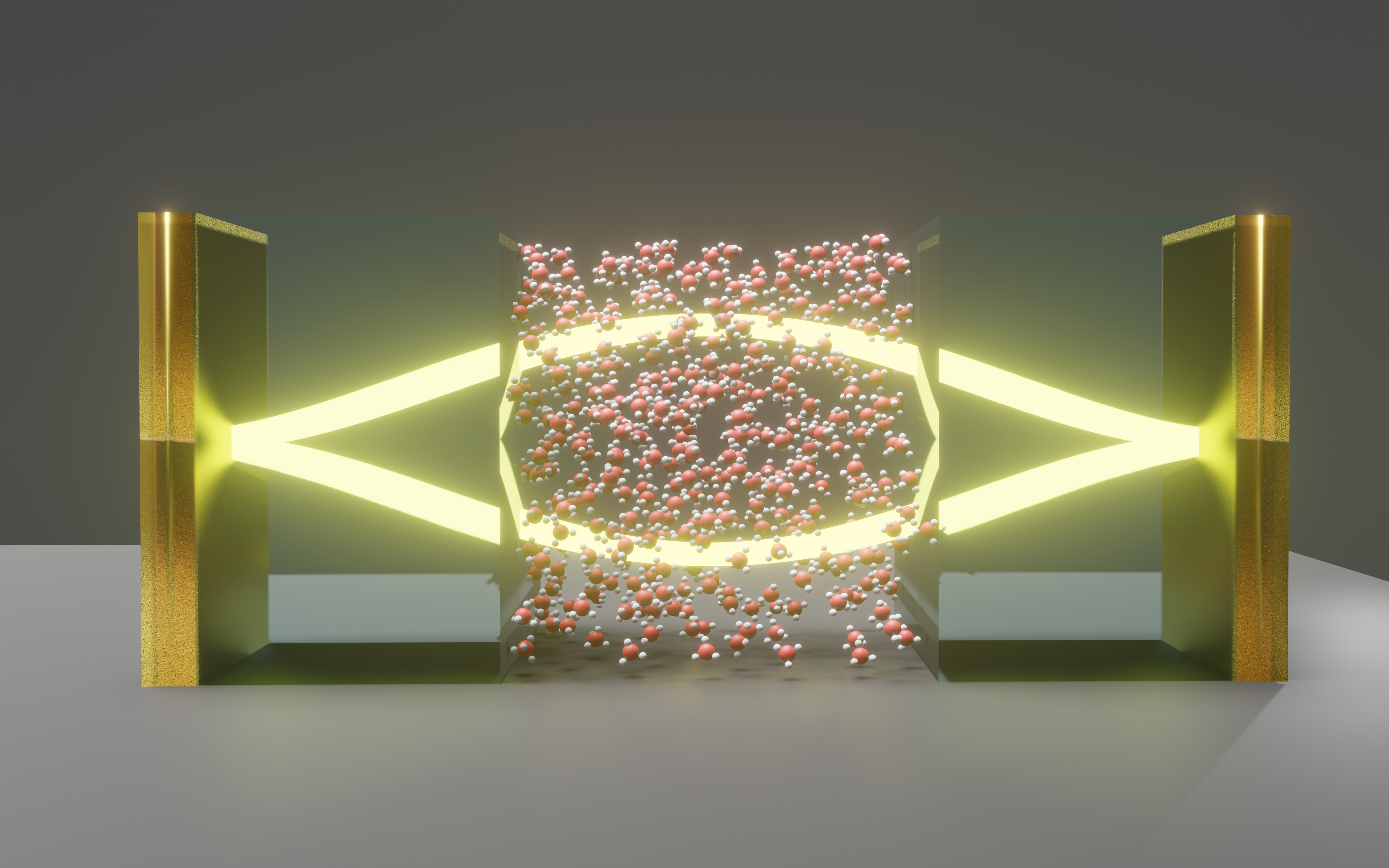
CavMD is an efficient method for simulating collective vibrational strong coupling in large ensembles of realistic molecules, which expands the scope of conventional molecular dynamics.
Built on this framework, the project studies how cavity environments reshape molecular vibrations, e.g. energy transfer and spectroscopic responses in realistic systems. Recent examples include selective excitation of IR-inactive modes via vibrational polaritons (Ji & Li, 2025), two-dimensional IR-Raman spectroscopy of vibrational polaritons (Ji et al., 2026), and self-consistent light-matter simulations enabled by the MaxwellLink framework (Ji et al., 2026).
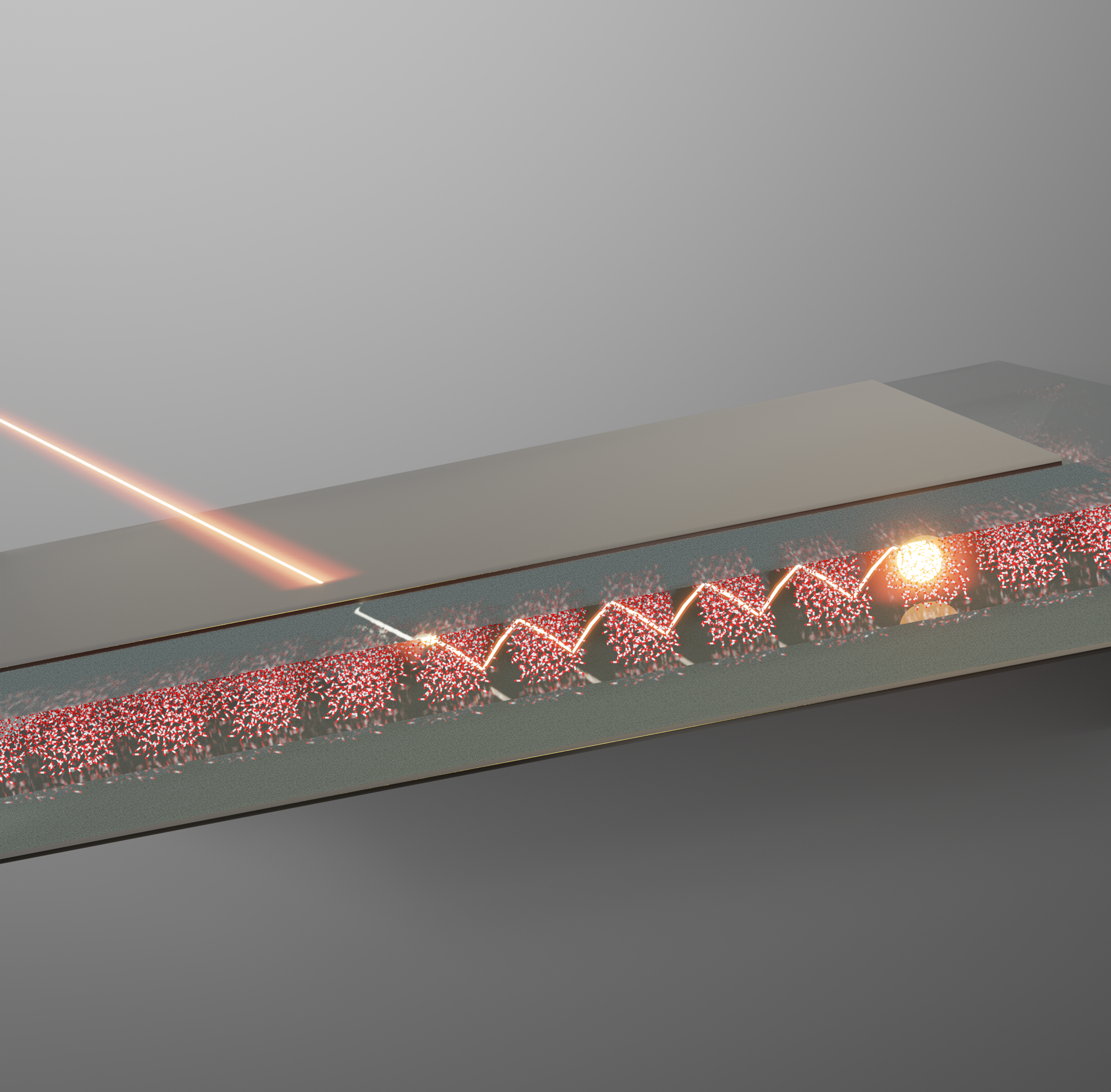
Recent mesoscale simulations further examine vibrational polariton transport beyond a simple ballistic-to-diffusive picture. Under strong pumping, polariton transport becomes frozen, exhibiting behavior reminiscent of Bose-Einstein condensation (BEC) induced by in-plane symmetry breaking. (Ji & Li, 2026).